Art in the Park:
MOA Marjorie Park
This article originally appeared in Landscape Architect Specific News and was authored by Norris Design Principal John Birkey.
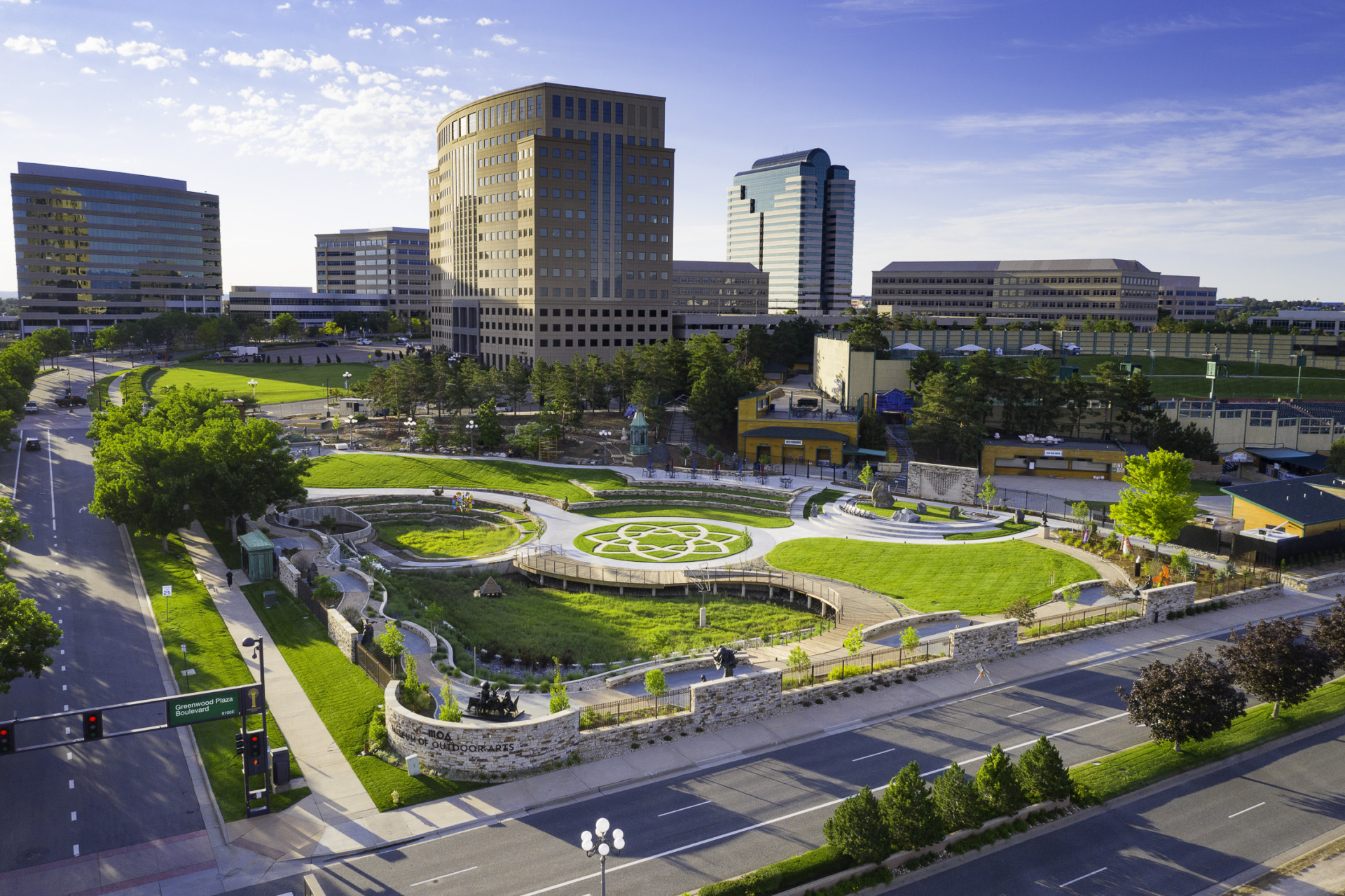
Marjorie Park – a primary venue of the Museum of Outdoor Arts (MOA) in Greenwood Village, Colorado – was created as an exclusive setting for a large portion of museum’s diverse, permanent sculpture collection. A recent renovation improved the site as a distinctive cultural experience, performance venue, and gathering space while upgrading the stormwater management system and improving park function through landscape architecture as art. The Denver office of national landscape architecture and planning firm Norris Design was selected for the endeavor. They collaborated closely with the museum, the project’s civil engineer S.A Miro, Inc., electrical engineer IMEG, stone masons from Rock and Company, and other subcontractors to develop the primary vision and final concept for the park. Local drainage and stormwater control requirements mandated that the site function as part of a regional system capable of handling 100-year flood elevations.
The Canvas
Situated in the heart of the Greenwood Village Business Development and just east of the Fiddler’s Green Amphitheatre, the existing park consisted primarily of a bluegrass lawn, various sculptures, and a retention pond with permanent standing water, which caused maintenance and safety concerns. The pond once occupied a majority of the site but had deteriorated from years of being inundated with runoff from the drainage basin of the adjacent business development that consisted of pavement and manicured turf. These diminishing conditions produced water quality issues and sediment accumulation in the pond. The prevailing site also had steep slopes leading down to the pond, which was surrounded by a wrought iron safety fence that regularly collected refuse and had become a nuisance for the park.
Stormwater Management
Careful analysis of flood volumes and water elevations was necessary to identify which portions of the park could be dedicated to stormwater detention and which areas could serve for part-time or permanent passive and recreational use. With these parameters identified, incremental design options began to take shape through a collaborative effort between the owner, engineers, and Landscape Architects, who used 3D renderings and imagery extensively to present detailed concepts to the client and project team throughout the planning phase.
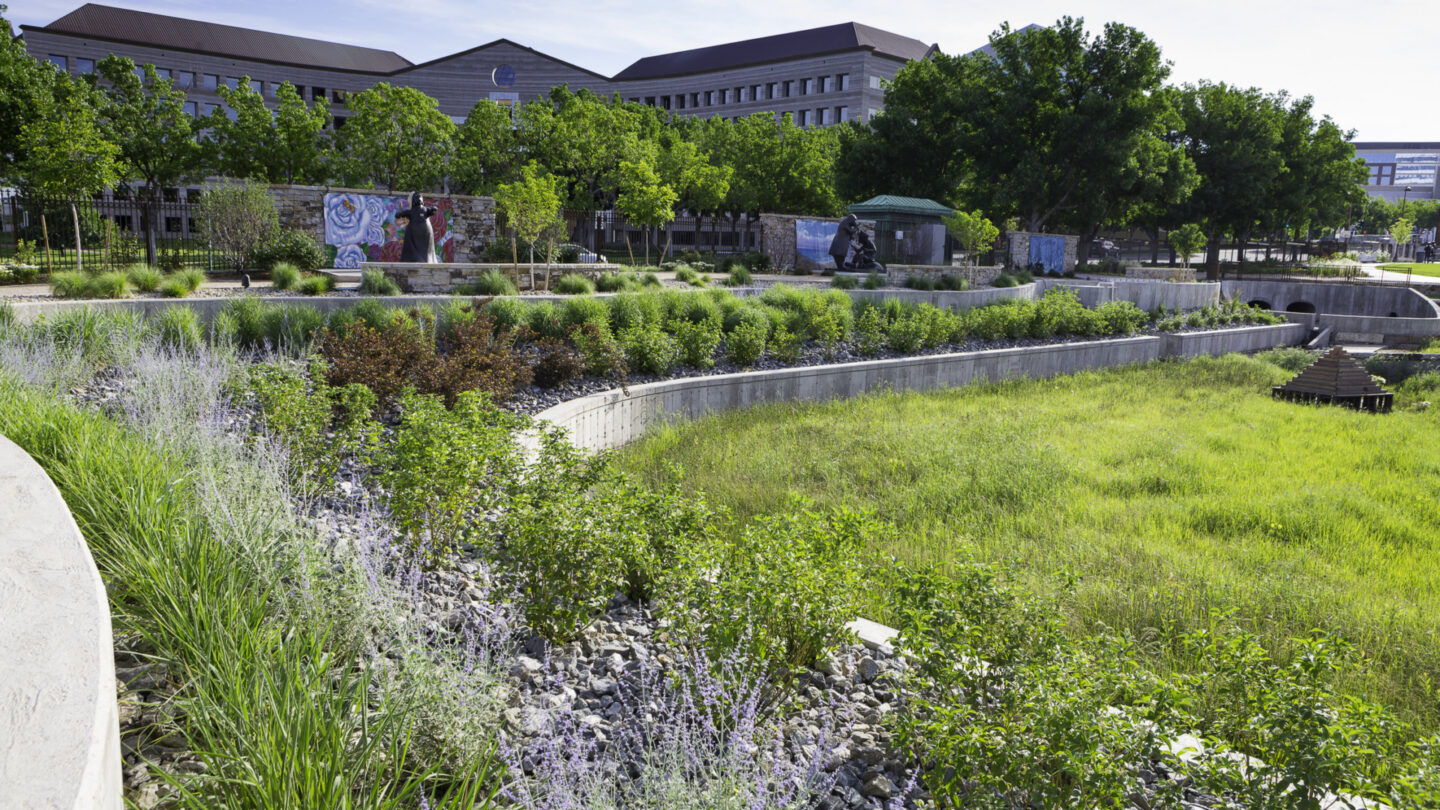
In the end, an underperforming portion of an urban drainage system was replaced with a high-functioning, vegetated detention basin that takes an ecological and educational approach to stormwater management, runoff, and water quality strategies. Furthermore, the space is useable and aesthetically pleasing: progressing from an area of little interest and high maintenance to a design element that enhances its surroundings. Visitors can better understand and interact with the dynamics of stormwater and how it is filtered onsite using the forebay, bioswales, and areas planted with native grasses and rain garden plant species that can accommodate periodic deluges and cleanse the water before it leaves the park.
Other Key Elements
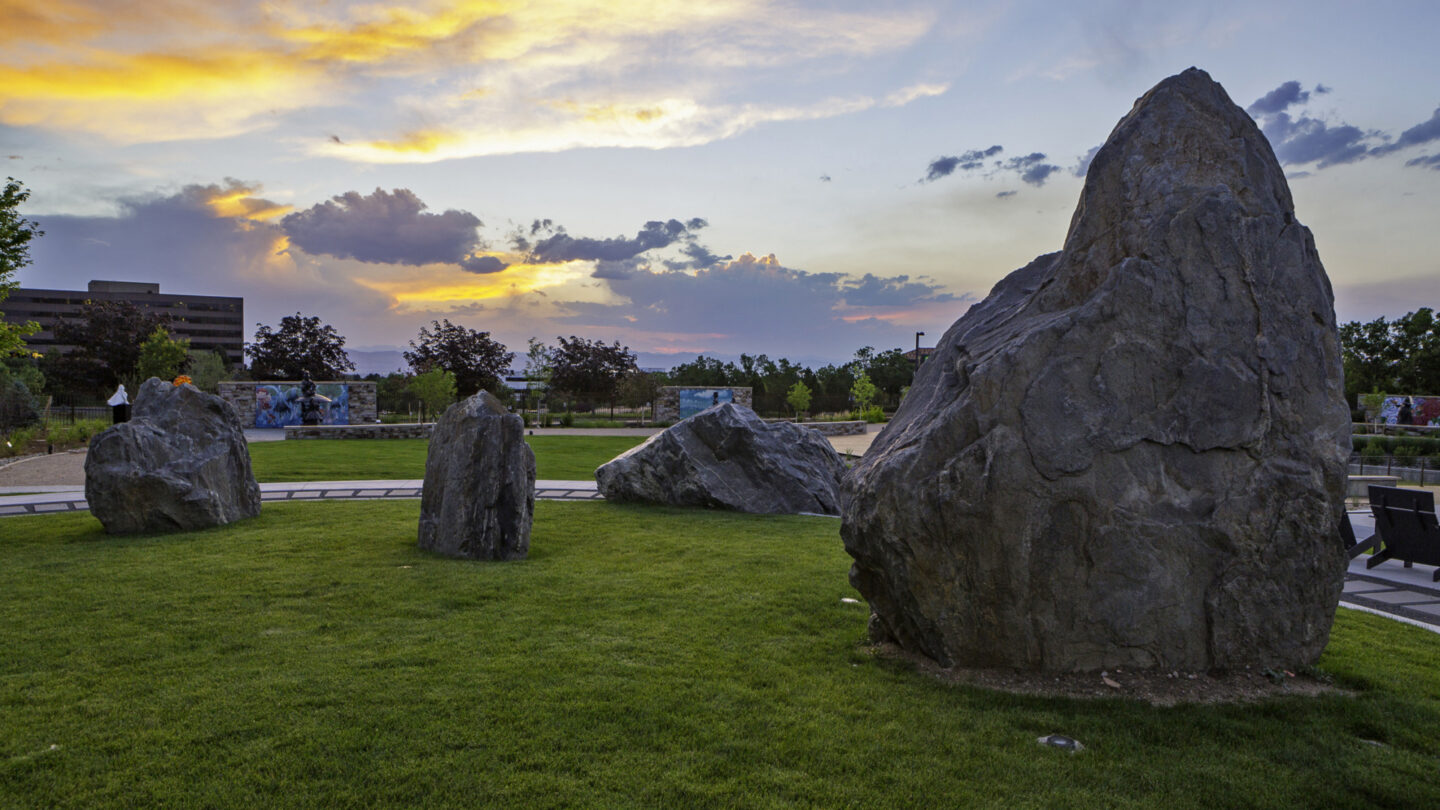
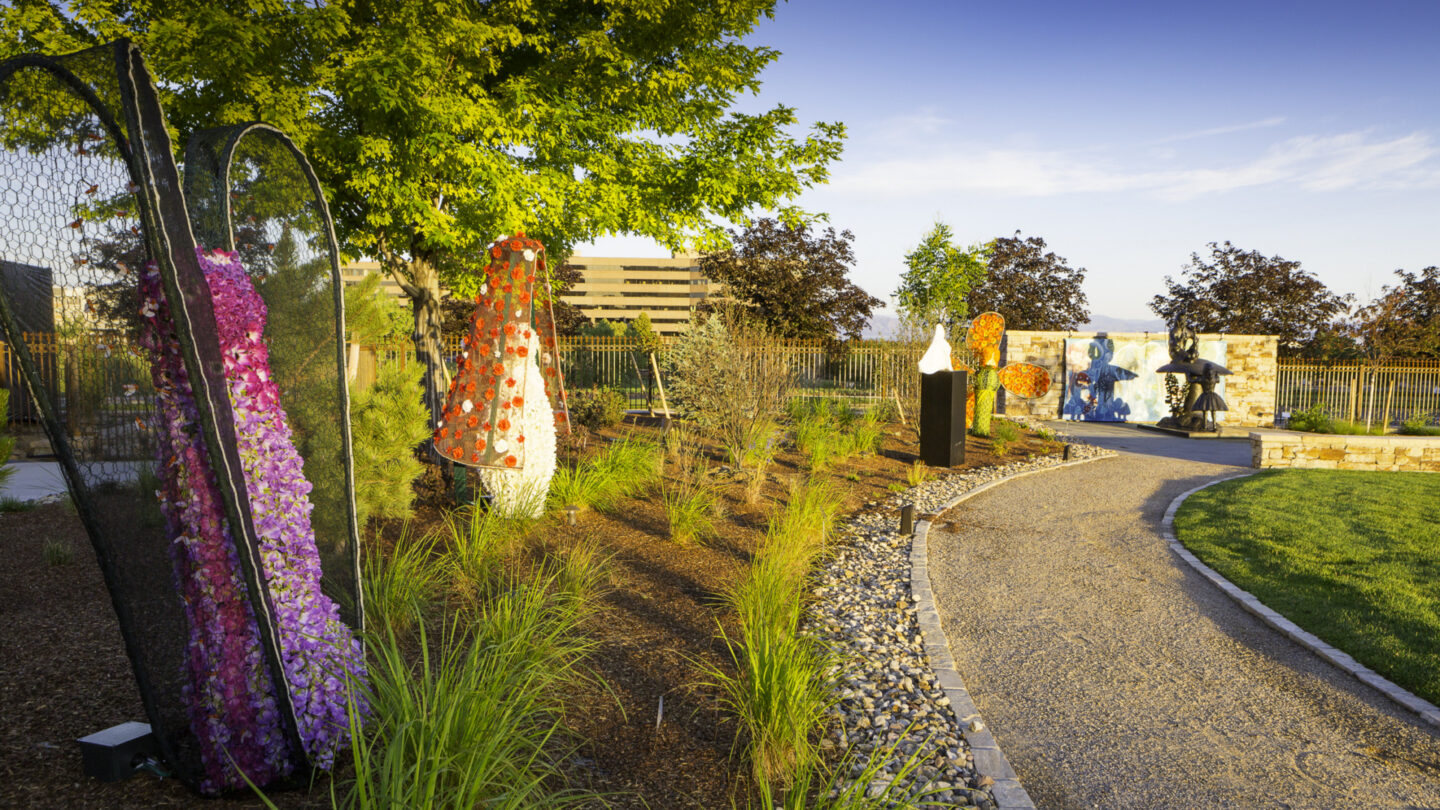
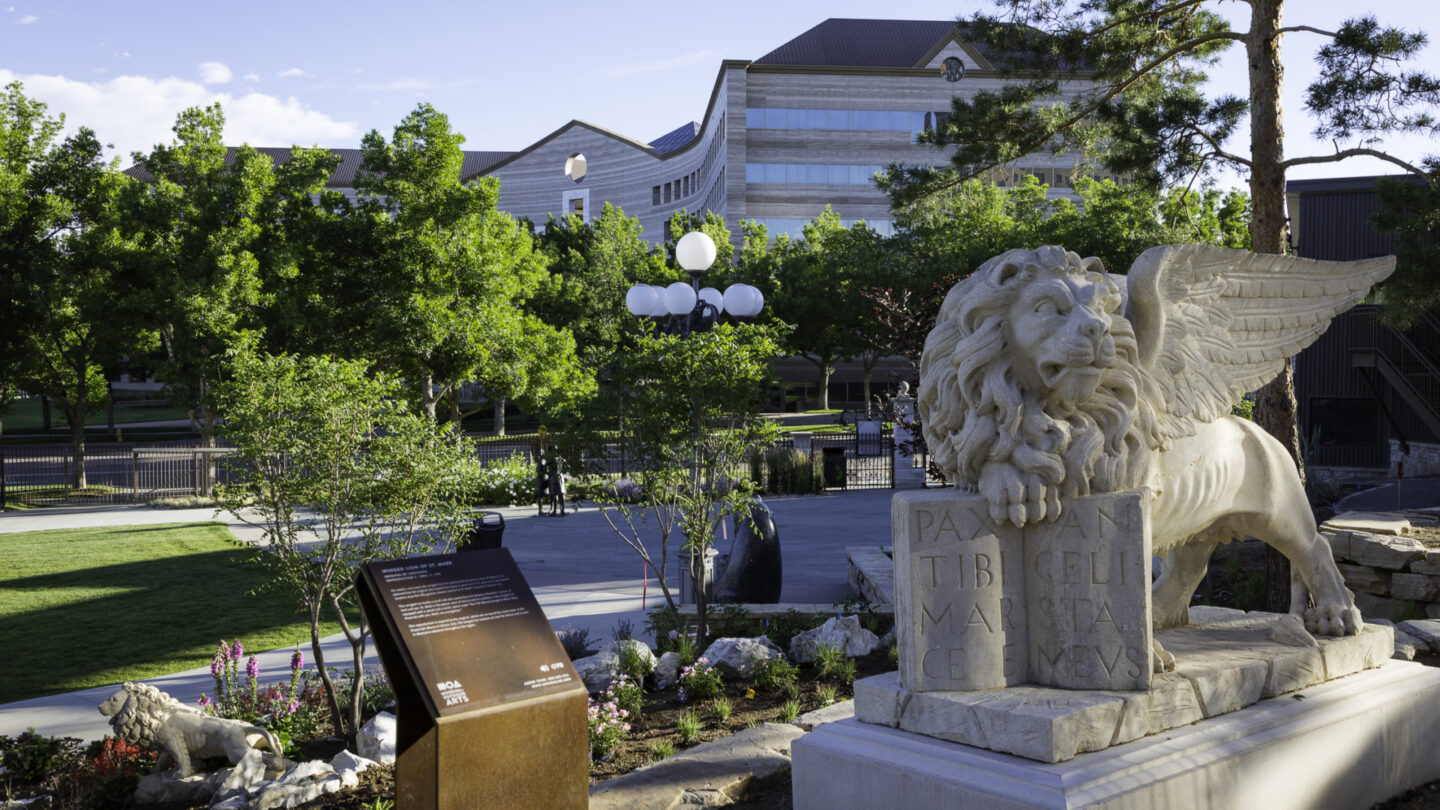
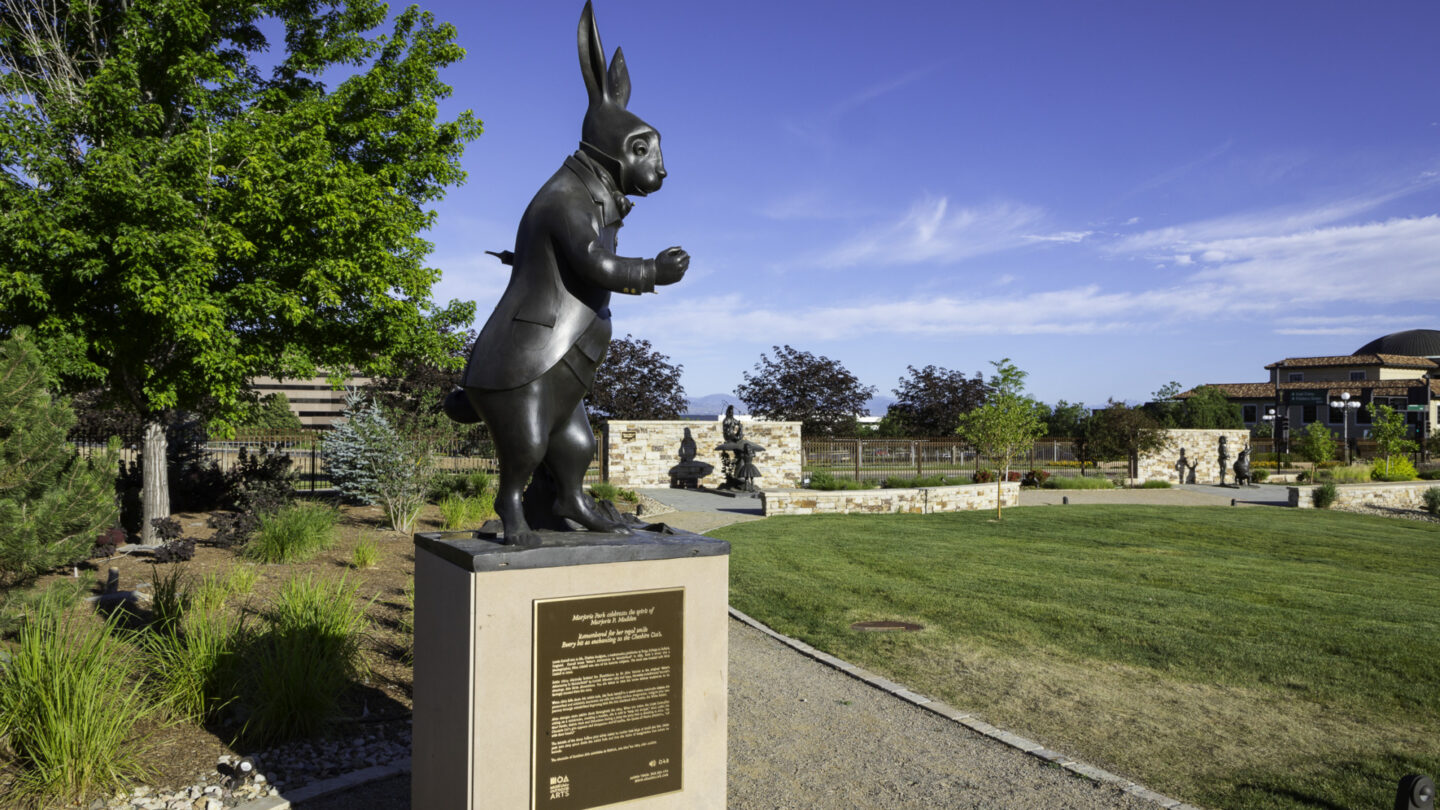
The Landscape Architects facilitated numerous programmatic elements within the park and its meandering trails. These include an entry plaza with café tables and seat-walls, open-lawn areas, a looped art walk with Alice in Wonderland sculpture scenes, a seven-petaled vesica made of mosaic stone tiles, a Zen-inspired garden with large granite monoliths, and The Lion’s Den – a wooded path through mature pine trees displaying several lion sculptures. A variety of seating and overlook spaces orient users towards a central boardwalk stage area.
Botanical Approach
The park’s planting schemes were categorized into four distinct-yet-cohesive typologies: low-water-use-ornamental, native, whimsical, and woodland. The two plazas and main walk exhibit a low-water-use ornamental style. The detention basin and boardwalk provide native elements that reflect regional ecology and enhance seasonal interest. A whimsical, English Garden-inspired palette accompanies the Alice in Wonderland sculpture collection, and The Lion’s Den consists of woodland components that frame views into the rest of the park for users accessing the amphitheater entrance. Constructive measures to prevent soil erosion were part of the planning, thereby improving the park’s environmental conditions.
Appreciating Amenities
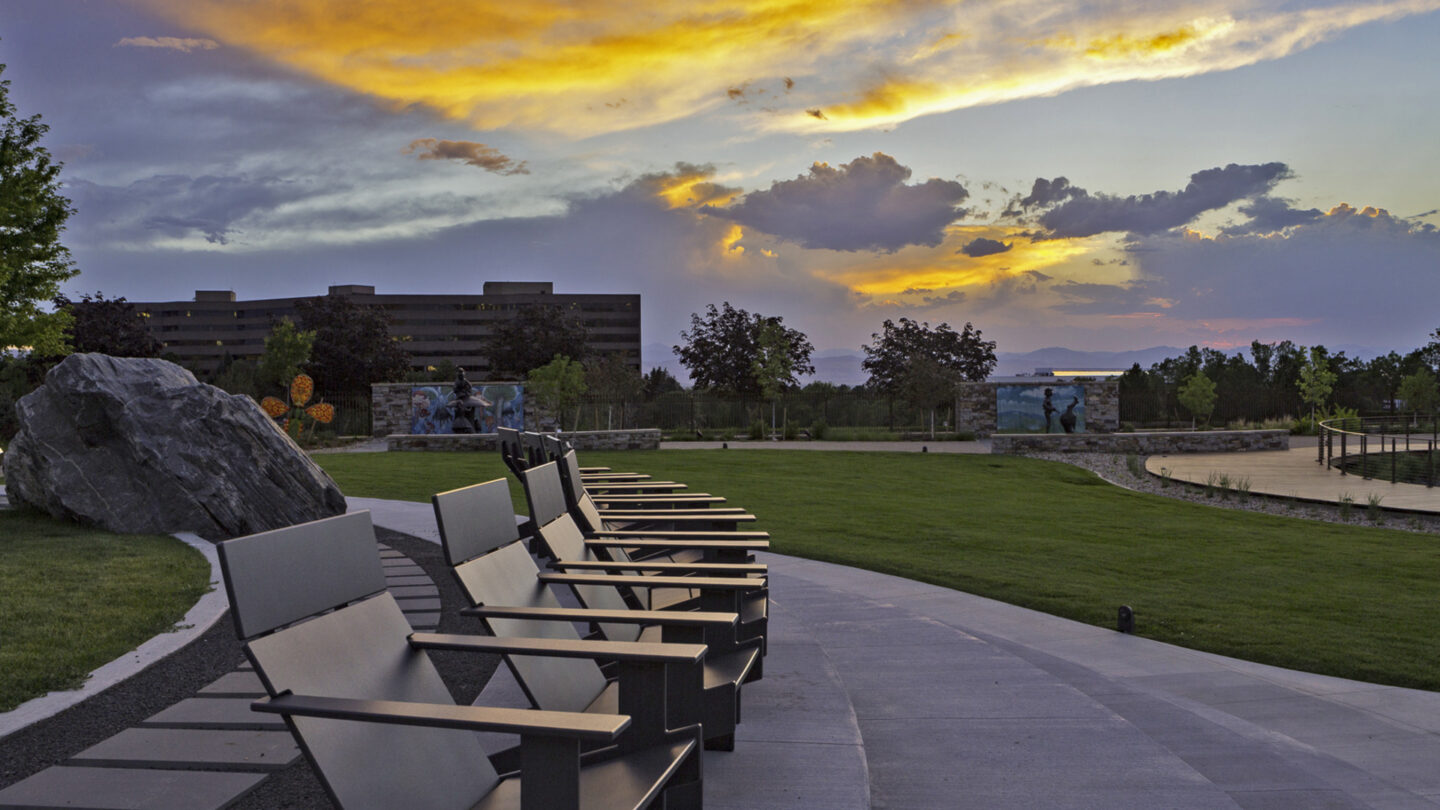
The park is designed to host a variety of outdoor activities and experiences. For example, small, intimate seating opportunities offer interaction with the sculptures. Café tables, seat-walls, and benches are the perfect place for lunch or work breaks for employees in the adjacent offices. Larger gatherings, musical performances, and community events of various scales can use the series of multi-use lawns and terraces graded into the gently sloped park. Pathway lighting ensures that the park maintains visual and experiential interest after dark while supporting patrons exiting the venue. In addition to upgrading the park’s sustainability and visual appearance, improvements were made to accessibility, such as the folly bridge that extends over the retention pond towards the central portion of the park.
Marjorie Park accommodates art programming functions such as tours, arts education, temporary art installations, and community arts events as well as rentals for private and corporate events. The park also serves as the VIP entrance and amenity area for concerts at the neighboring Fiddler’s Green Amphitheater. Overall, the park provides a beautiful respite spot amid the surrounding urban framework.
In Closing
The renovation of Marjorie Park at the Museum of Outdoor Arts enhances the site’s aesthetic vitality while maintaining its core identity as an open-air museum and performance space. With its focus on landscape architecture as art, its abundance of sculptured works, and its sustainable approaches to stormwater management, Marjorie Park represents a rich convergence of culture, ecology and the owner’s mission to “make art a part of everyday life.”