Integrating Pollinator Habitat into Our Communities:
Win-Win

This article originally appeared in Colorado Real Estate Journal: Building Dialogue and was authored by Norris Design’s Senior Associate Carl Runge.

For decades development has primarily focused on maximizing land’s value for human habitation, recreation and leisure. Environmental protection, preservation, and renewal are often limited in scope to only what is required by the pertinent legal authorities. This approach has resulted in measurable degradation of the natural world and adverse effects that research increasingly shows have a direct negative impact on us. To mitigate and even reverse these trends we must identify opportunities to provide natural habitat within the spaces and communities we design.

Recently, a major focus in ecology has been the loss of pollinator habitat and its far-reaching effects on the countless species that depend on it for survival. To focus on Colorado specifically, recent studies have found that insect populations here have fallen by more than 60% in the past few decades, with habitat loss being a primary contributor to this decline. This issue is especially concerning given the findings of the “Colorado Native Pollinating Insect Health Study,” commissioned by the state in 2022, which reported that “billions of dollars’ worth of agricultural production” depends on pollinating insects. Beyond their agricultural value, the study also notes that pollinators provide essential ecosystem services including climate regulation, erosion control and nutrient cycling.

Pollinator habitat also offers benefits to developers and residents. A recent report issued by the Institute for Climate and Sustainable Growth at the University of Chicago found that home prices in communities surrounding development that prioritizes environmental protection and preservation see an increase in value of as much as 10%. Colorado’s natural beauty and open spaces continue to attract new residents, and people increasingly view their homes as part of a larger, interconnected environment. There is a growing focus on how their surrounding environment positively contributes to their sense of well-being. Municipalities throughout the state increasingly require allocation of naturalized areas within developments that expand and connect a growing network of wildlife and pollinator corridors.

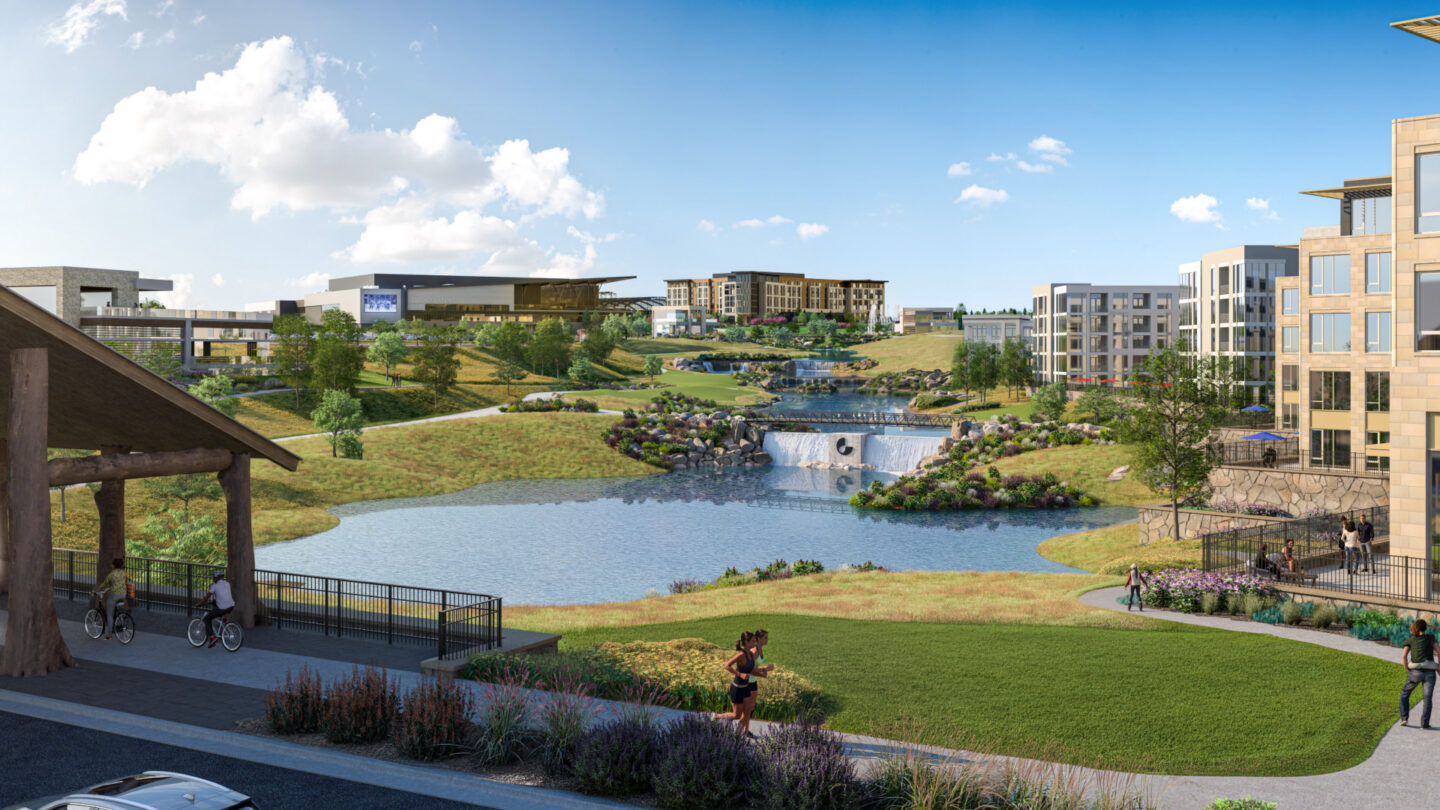
Norris Design recently completed the Bloom master-planned community in Fort Collins, which includes a Pollinator Master Plan to support and promote pollinator habitat throughout the site. The team worked closely with the developer, Hartford Homes, and the city of Fort Collins to craft design standards for residents and the metro district to utilize in both common and private landscapes, ensuring a vibrant and connected ecosystem throughout the community. Another development, McWhinney’s Baseline project in Broomfield, was designed in partnership with the Butterfly Pavilion to be the world’s first designated Pollinator District, connecting natural resources, government agencies, developers, and conservation organizations in a new model for sustainable growth. This thoughtful approach to design has resulted in eager buy-in from developers and quick progress on build-out and construction.

Baseline demonstrates what can happen when developers work not just with a municipality, but also with nonprofit, environmentally focused entities to validate and help sell the overall vision of a community to the public. In the era of “not in my backyard,” engagement with organizations not often associated with development can successfully leverage their goodwill to communicate the benefits and added value a project will offer the public.

These opportunities for partnership are not limited to the early stages of development. Groups such as the National Wildlife Federation have departments that can be leveraged for ongoing research to assess the effectiveness of designed landscapes and help develop maintenance strategies to maximize continued benefit. One example of this is the Trailstone community in Arvada, where Norris Design partnered with Taylor Morrison and the NWF to create a certified wildlife habitat garden with native plantings and other elements that provide essential resources for pollinators. The NWF continues to monitor the site, completed in 2024, as part of its ongoing research. This partnership distinguishes Trailstone for its commitment to long-term collaboration and sustainability.

There are smaller, more subtle, ways we can integrate pollinator habitat into our communities to have a large overall impact. Plant palettes can be developed with an emphasis on native species that provide crucial food and shelter to pollinators. Landscape maintenance practices can be amended to reduce or eliminate the use of pesticides and adjust pruning time frames to better align with critical points in the reproductive cycles of insects. Educational signage and resources can be created to inform the public and residents of the intention behind the design and inspire them to create pollinator habitat in their own private landscapes. Adoption of any of these strategies, at any scale, is a step in the right direction.

When land is developed in concert with the native ethos, it benefits both wildlife and humans. It strengthens relationships between developers, communities, and municipalities; supports the state’s ecosystems and the industries that depend on them; adds financial value to new homes; and inspires residents to take pride in Colorado’s natural landscapes, helping to preserve them for future generations.

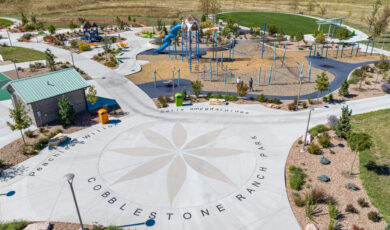
Cobblestone Ranch Park

This article originally appeared in Landscape Architect Magazine.    Located on the northeastern edge of Castle Rock, Colorado, Cobblestone Ranch…

Read More